A Complete Guide to Triclover Gauges: Applications, Benefits & Industry Standards
So you’re dealing with pressure gauges in your plant and someone mentioned Triclover gauges. Maybe you got written up by an inspector, or maybe you’re just tired of replacing gauges every few months because they keep getting gunked up during cleaning. Either way, you’re here because regular gauges aren’t cutting it anymore.
Been there. Spent way too many years fighting with threaded gauges that looked like science experiments after a few cleaning cycles. The worst part? You never know if they’re reading correctly until something goes wrong. Real wrong.
Here’s the thing about Triclover gauges – they’re not magic, but they solve problems that regular gauges can’t. If you work anywhere that has to stay clean (food, pharma, dairy, whatever), these might save your sanity. And probably some money too.
What Are Triclover Gauges Anyway?
Regular pressure gauges screw into your piping with threads. Works fine until you need to clean everything with hot chemicals. Those threads trap gunk, the internals get contaminated, and pretty soon you’re looking at a gauge that might be lying to you.
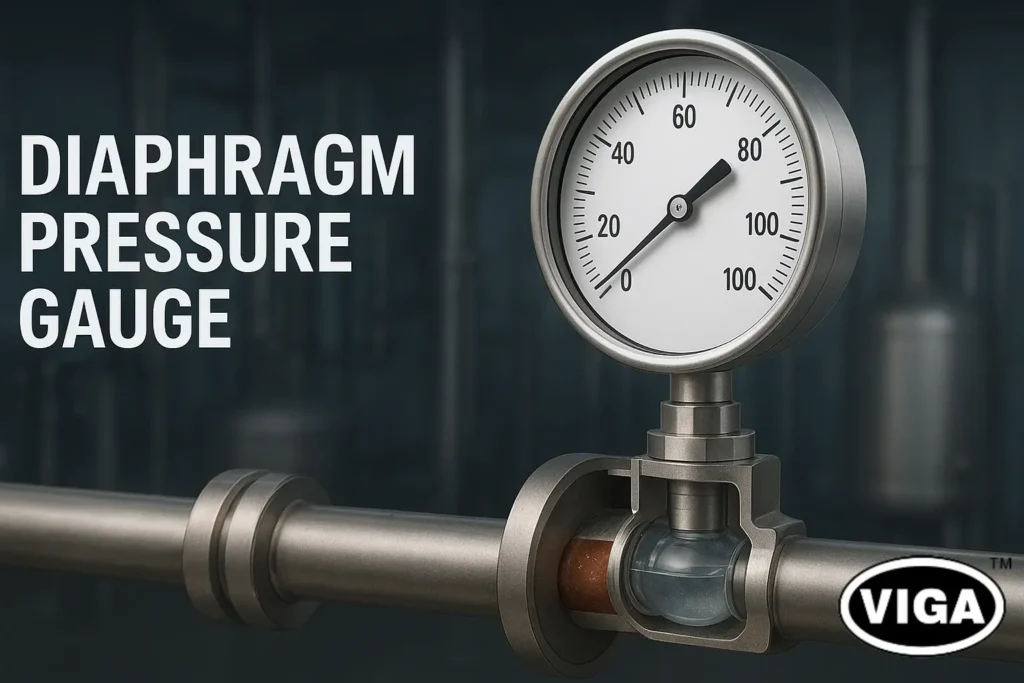
Triclover gauges work different. Instead of threads, they use this clamp-on system. Three pieces – two pipe ends, a rubber gasket, and a metal clamp that squeezes everything together. No threads anywhere. The gauge sits flush against your pipe with smooth surfaces all around.
The name comes from the three-part clamp system. Used to be a trademark thing, but now everyone calls them Triclover gauges even when they’re made by other companies. Like how people say “Kleenex” for tissues.
Main thing is the design. Everything that touches your product is smooth stainless steel, polished up nice. Bacteria hate that. They need rough spots to grab onto, and these gauges don’t give them any.
Why does this matter? Because contaminated gauges have shut down entire plants. Seen it happen. One bad gauge reading leads to bad product, which leads to recalls, which leads to very unhappy customers and regulators.
Where You Actually Need These Things
Pharmaceutical Plants
Pharma is where this stuff gets really serious. One contaminated batch can literally kill people. No exaggeration.
I know a guy who works at a facility that makes cancer drugs. They had a contamination event traced back to a pressure gauge that wasn’t getting clean during their wash cycles. Cost them three batches worth about $2 million, plus they had to shut down for a week while they figured out what happened.
Their bioreactors need precise pressure control. Too much pressure kills the cells, too little stops the process. But they also have to sterilize everything with superheated steam between batches. Regular gauges either fail from the heat shock or create dead spaces where bugs can hide.
After switching to Triclover gauges, their contamination rate dropped way down. Turns out those smooth surfaces really do make a difference when you’re trying to keep things sterile.
Food and Beverage Operations
Food processing has gotten pretty serious about contamination. Used to be “if it doesn’t smell bad, it’s probably fine.” Not anymore.
Dairy plants are probably where these gauges make the most sense. Milk is basically bacteria food. Everything has to be spotless or you get nasty stuff growing everywhere. Their pasteurization lines need exact pressure and temperature control – too low and you don’t kill the bad stuff, too high and you ruin the taste.
Worked with a dairy plant that was replacing regular gauges every six months because the cleaning chemicals were eating them up. Switched to Triclover gauges four years ago and they’re still using the same ones. Plant manager says it’s the best equipment decision they ever made.
Breweries are getting into this too. Craft beer guys are obsessive about cleanliness because wild bacteria can ruin entire batches. One brewery owner told me he switched after losing three batches in a row to contamination. Said the Triclover gauges paid for themselves in the first month just from not losing product.
Other Places Where Clean Matters
Water treatment plants use these on their membrane filtration systems. Makes sense – you don’t want your monitoring equipment contaminating the water you’re trying to clean.
Cosmetics companies too. Sounds less critical than pharma, but think about it – people put this stuff on their faces every day. Contaminated moisturizer can cause skin reactions in thousands of people. The lawsuits alone will kill you.

Why These Gauges Actually Work
Cleaning That Works
Regular gauges are impossible to clean properly. All those internal threads and cavities never get completely clean no matter what you do. Even if you take them apart (which screws up the calibration), you still can’t get to everything.
Triclover gauges solve this by eliminating the problem. The sensing part stays sealed while everything else can be cleaned in place. When you run cleaning chemicals through your lines, you’re cleaning the gauge connection at the same time.
Had a facility do contamination testing after cleaning – swabbed both types of gauges after identical cleaning procedures. Traditional gauges still showed bacteria colonies. Triclover gauges came up clean every time.
Maintenance That Doesn’t Suck
Here’s what nobody tells you about gauge maintenance – it’s expensive. Not just parts, but labor time, production downtime, recalibration after every cleaning. Adds up fast.
Triclover gauges disconnect in about 30 seconds. Pop the clamp, pull out the gauge, clean it, put it back. No tools needed except the clamp itself. No recalibration because you didn’t mess with the sensing mechanism.
One pharmaceutical plant I know has been running the same Triclover gauges for eight years. Same accuracy, still look new. Try that with regular gauges in that environment.
Staying Legal
FDA inspectors know what they’re looking at. When they see Triclover gauges, they know you understand contamination control. When they see old-style threaded gauges, they start asking uncomfortable questions.
The 3-A standards spell out exactly what sanitary equipment should look like. Smooth surfaces, no dead spaces, materials that can handle cleaning chemicals. Triclover gauges hit all those requirements by design.
The Connection System
The Tri-Clamp connection is brilliantly simple. Two pipe ends with angled faces, a gasket between them, and a clamp that squeezes everything together. The angled faces create a line contact that concentrates all the sealing force exactly where you need it.
What makes this great is how fast you can connect and disconnect everything. I’ve timed myself – under a minute to remove a gauge, inspect it, and put it back. No wrestling with pipe wrenches, no thread compound, no swearing.
Sizes are standardized globally. A 2-inch fitting from one manufacturer works with components from any other manufacturer. Makes inventory management much easier.
Most gauge applications use 1.5″, 2″, or 3″ connections. Smaller for low-flow applications, larger when you need easy access or higher flow rates.
Standards That Matter
3-A Sanitary Standards
Started with dairy equipment but now used across food and pharma industries. Covers everything – surface finish, joint design, materials, cleanability. Standard 74-06 specifically covers pressure gauges.
FDA Requirements
FDA doesn’t just check paperwork – they look at your actual equipment. Using compliant equipment shows you understand the principles, not just the rules.
ASME Standards
Covers accuracy and safety requirements. Sanitary design doesn’t mean you can compromise on basic gauge performance.
Picking the Right Gauge
Pressure Range
Size your gauge so normal operating pressure falls in the middle third of the scale. Too low and you can’t read it accurately. Too high and you’re wearing out the mechanism.
Learned this lesson at a beverage plant with 100 PSI gauges on a 10 PSI system. Plenty of safety margin but impossible to read accurately from any distance.
Temperature
Standard gauges handle -40°F to 150°F. High-temp versions go to 400°F for steam applications. Don’t forget ambient temperature – a gauge that’s accurate in the lab might drift in a hot plant.
Materials
316L stainless steel works for most applications, but some cleaning chemicals will attack even good stainless over time. Had one facility using a cleaner with hydrofluoric acid that was eating their gauges. Took special alloy parts to fix that.
Installation Tips
Clean everything before assembly. The fittings, gasket, clamp, your hands. One speck of dirt creates a leak.
Don’t overtighten the clamp. The geometry creates the seal, not brute force. Overtightening just damages gaskets.
Pick the right gasket material. EPDM for most food applications, Viton for aggressive chemicals or high temperatures, silicone for chemical compatibility but harder to clean.
Maintenance Reality
Visual inspection catches most problems. Look for gasket damage – cracking, hardening, permanent deformation. Surface corrosion usually starts as discoloration.
Calibration frequency depends on your application. Pharmaceutical might need quarterly checks, food processing often runs annual. But don’t assume any gauge stays accurate forever.
Follow chemical compatibility guidelines. Seen too many expensive gauges destroyed by using the wrong cleaners.
Where Things Are Going
Basic Tri-Clamp connections aren’t changing – they work too well. But the gauges are getting smarter. Digital transmitters with wireless monitoring, predictive maintenance, self-diagnostics.
Materials keep improving too. Better corrosion resistance, longer life. For really aggressive applications, new alloys could be game-changers.

Bottom Line
Pressure measurement isn’t exciting, but it’s critical. In industries where contamination can shut you down or hurt people, these gauges solve real problems.
Initial cost is higher, but they pay for themselves through reduced contamination risk, easier maintenance, and longer life. Working with knowledgeable distributors like VIGA makes selection and implementation smoother.
Whether you’re upgrading or building new, the question isn’t whether you can afford Triclover gauges – it’s whether you can afford not to use them.
Common Questions
Q1. What if a gauge fails during production?
A. Quick replacement is the biggest advantage. Takes less than five minutes to swap out a failed gauge. Keep spares on hand and train operators on replacement procedures.
Q2. How do you know the gauges are actually clean?
A. ATP testing measures biological contamination in real numbers. Visual inspection catches obvious problems, but ATP testing tells you if cleaning procedures actually work.
Q3. Can you use the same gauge for different products?
A. Depends on your products and regulations. Many facilities dedicate gauges to specific product lines to avoid cross-contamination. Easy to swap with Triclover connections.
Q4. Do they stay accurate after repeated cleaning?
A. Quality gauges maintain accuracy because the sensing mechanism stays protected during cleaning. Key is using compatible chemicals and following proper procedures.
Q5. How about high-vibration environments?
A. Liquid-filled gauges work for vibration damping. Make sure the fill fluid works with your temperature range and cleaning procedures.
Q6. Why trust an Indian distributor?
A. It’s about competence, not geography. Focus on technical knowledge, quality systems, track record. VIGA built their reputation by understanding applications and supporting customers properly.