

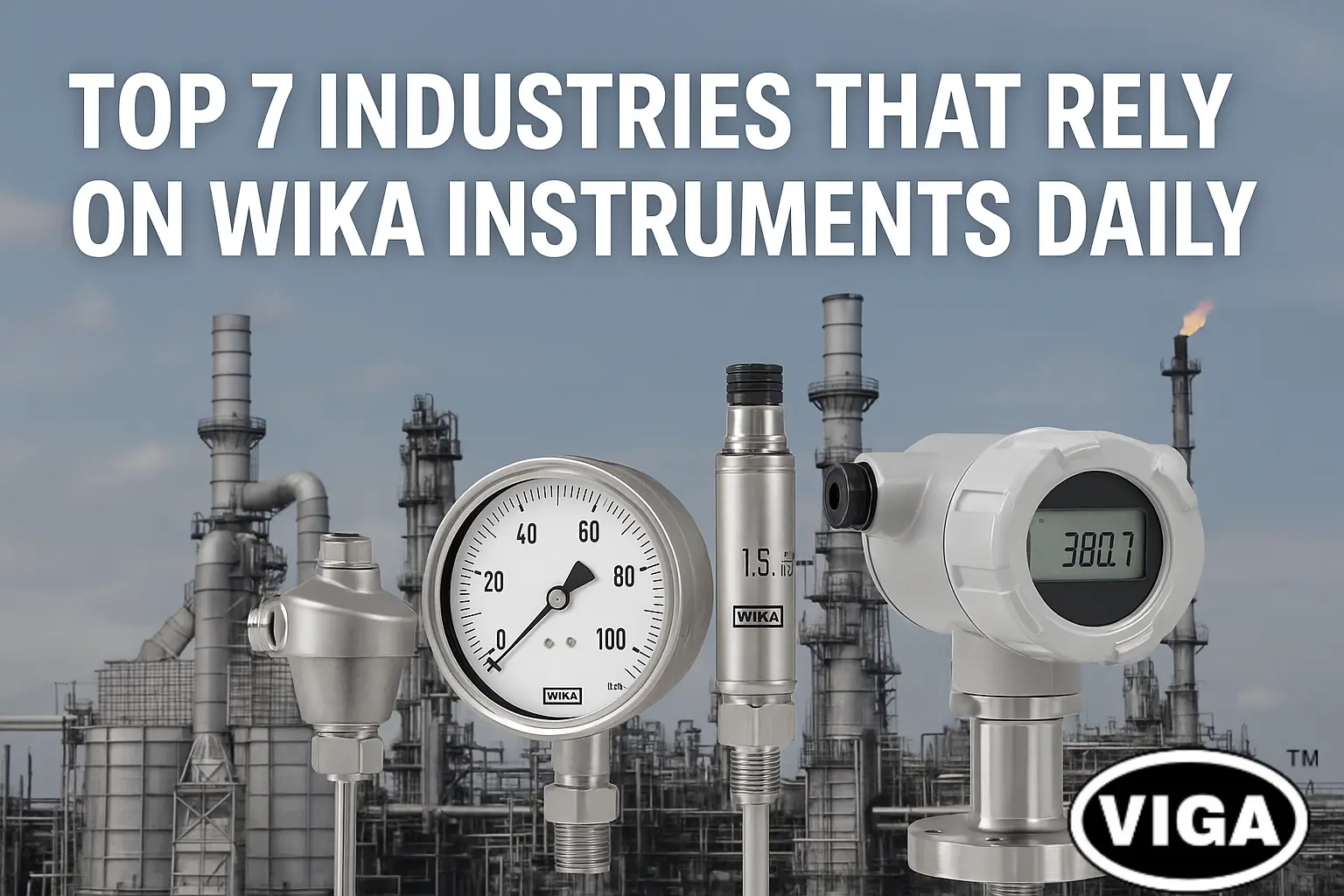
Top 7 Industries That Rely on WIKA Instruments Daily
Top 7 Industries That Count on WIKA Instruments Every Day
In industrial operations, being precise isn’t just nice to have; it’s a must for keeping people safe, machines running, and products up to standard. Every second, systems need to know the exact numbers for pressure, temperature, level, and flow. That’s where WIKA comes in. As a leading maker of measurement tools worldwide, their devices are the gold standard for dependability and performance. Although they work in almost every field, some industries depend on the solid engineering of WIKA products more than the rest.
These fields run in extreme heat, cold, and pressure, are kept in line by tough rules, and can’t risk a measurement failure. Whether they’re hundreds of meters underwater or in a spotless lab, the demand for instruments that never lie is the same. In the following sections, we’ll look at seven key industries that trust WIKA devices every day, showing how that trust keeps their operations safe and successful.
Why WIKA Instruments Are the First Choice for Critical Industries
Before we look at how WIKA meets the needs of different sectors, it’s important to see what makes their instruments so trusted. Engineers, plant managers, and procurement teams around the world point to a few solid reasons.
First, WIKA is all about quality and durability. Their instruments are designed to handle tough industrial conditions, whether that means strong vibration, extreme temperatures, or harsh, corrosive fluids. The wide product selection means you can often find everything you need from a single vendor, which simplifies even the most complicated projects.
Second, WIKA backs its durability with a deep knowledge of global standards. Instruments carry approvals for hazardous areas like ATEX and IECEx, for food and pharmaceutical plants you see 3-A and EHEDG, and the ISO 9001 stamp for quality management. These certifications are proof that the instruments can perform under the strictest conditions, supporting the four pillars of Experience, Expertise, Authoritativeness, and Trustworthiness. In industries where compliance isn’t optional, that proof is non-negotiable.

The 7 Industries Where WIKA Instruments Are Essential
The following sectors are a snapshot of today’s economy. Here, accurate and dependable measurement isn’t a luxury—it’s a must.
Oil & Gas: From the Ground to the Gas Station
The oil and gas sector is tough on equipment. Starting in the field and continuing on pipelines and in refineries, workers face high pressure, raging heat, and stuff that eats metal. If a sensor or valve lets go, the bills, the spills, and the injuries skyrocket.
What We Do:
Upstream: In the field, WIKA products watch the wellhead pressure, control the separators, and manage the injection pumps. Our high-pressure gauges and transmitters keep working under wild vibration and in the risk of hydrogen sulfide (H2S). Many of them pass the harsh NACE MR0175 and ISO 15156 tests for sour gas.
Midstream: Pipelines and tankers need eyes on the oil and gas the whole trip. Our flow meters, pressure transmitters, and temperature sensors keep the product safe and on the clock. Level gauges on the storage tanks guard against overfills and keep the inventory counts straight.
Downstream: Refineries turn crude oil into products that drive our economy, but doing it safely and reliably is anything but simple. In this challenging setting, WIKA diaphragm seals stand guard over delicate pressure gauges, keeping harmful, sticky fluids at bay. Accurate temperature readings in distillation towers, furnaces, and reactors are equally crucial; they help maintain stable operations and ensure that products meet strict quality specs. According to Kimberlite International Oil & Gas Research, a single day of unplanned shutdown on an offshore platform can burn a $7-8 million hole in the budget, making dependable gear an absolute must.

Chemical & Petrochemical: Keeping Safety and Purity First
The chemical sector operates in a world where the smallest tweak can swing a product from gold to waste, or worse, spark an explosion. Reactions need to stay within razor-thin limits; if they stray, quality drops and the risks rise. The fluids involved are often aggressive, poisonous, or inherently unstable, so every instrument has to be built for pinpoint accuracy and rugged safety.
Key Applications:
Reactor Monitoring: Pressure and temperature are the twin pulse beats of any chemical reactor. WIKA’s transmitters and thermometers serve up the live readings that let operators fine-tune conditions, push yields up, and keep the whole system stable and secure.
Material Compatibility: Standard stainless steel sometimes isn’t enough when faced with the toughest chemicals. WIKA steps up with gauges and diaphragm seals made from specialty metals like Hastelloy®, Monel®, and Tantalum, which laugh in the face of chlorine, sulfuric acid, and hydrofluoric acid. These exotic materials keep your readings steady and your process safe.
Hazardous Area Safety: Chemical plants often rank as hazardous zones because of flammable gases or dust clouds. WIKA has you covered with a wide choice of instruments that carry ATEX, IECEx, and other important safety stamps. Whether you need intrinsically safe (Ex i) designs or robust explosion-proof (Ex d) cases, our gear shrugs off danger. Keeping these instruments running smoothly helps you meet process safety management (PSM) rules that protect people and the planet from chemical leaks.

Power Generation: Keeping Efficiency and Uptime High
Power plants, whether traditional or green, count on measurement tools to keep the lights on and the impact low. WIKA gear helps squeeze every last bit of performance from every cycle. Just a small uptick in efficiency can shave big bucks off your bill and trim the planet’s carbon coat. With our gauges, every megawatt you generate is cleaner and cheaper.
Key Applications:
Conventional Power: Whether it’s burning fossil fuels or working with nuclear energy, turbines run safest and most efficiently when pressure and temperature are measured right. WIKA gives you solutions for checking boiler drum levels, keeping condenser vacuums on track, and watching turbine bearing temperatures. For nuclear plants, our instruments are specially made and rigorously tested to meet the toughest safety and documentation rules the industry has to offer.
Renewable Energy: Moving to green energy has brought fresh measurement puzzles. In wind turbines, WIKA pressure sensors keep an eye on hydraulic pitch systems and the gearbox oil. At hydro plants, our level and pressure sensors manage the water levels in the dam and control how much flows through the turbines, keeping everything in balance.
Electrical Transmission and Distribution: WIKA’s SF6 gas density monitors are the go-to choice for looking after the insulating gas in high-voltage circuit breakers and switchgear, which helps keep the electrical grid running without surprises.
Small improvements in efficiency can lead to big savings. The U.S. Department of Energy calculates that shaving even 1% off the heat rate of a 500-megawatt coal plant can save more than $600,000 a year in fuel costs. Keeping that kind of edge means relying on instruments that are both precise and stable.

Food and Beverage: Keeping Hygiene at the Heart
In the food and beverage world, every number you see on a gauge can affect how safe a product is and how it tastes. Because every ingredient matters, the entire processing line has to stay clean, and that means even the smallest sensor has to pass demanding hygienic design rules.
Key Areas of Use:
Sanitary Process Control: Our sanitary pressure gauges, temperature sensors, and diaphragm seals are made with smooth, crevice-free surfaces that meet 3-A and EHEDG hygienic standards. This design means you can easily run Clean-in-Place and Sterilize-in-Place cycles without worrying about hidden dirt.
Temperature-Sensitive Steps: Steps like pasteurization, brewing, and cold storage all rely on exact temperature control. Our RTDs and thermometers deliver the precision needed to kill off any pathogens while keeping flavor and texture just right.
Tank Level and Pressure: Machines like homogenizers, mixing tanks, and storage silos need reliable level and pressure readings. Our hygienic pressure sensors can do hydrostatic level measurement to keep batching and inventory of milk, juice, or syrup consistent and accurate.
In all of these cases, we use FDA-compliant fill fluids and materials to make sure there’s zero chance of any contamination entering the product.

Pharmaceutical & Biotechnology: Precision for Life Sciences
In pharma and biotech labs, hygiene isn’t just important, it’s the law. Every detail must be spotless, every material traceable, and every step double-checked. That’s why Good Manufacturing Practices (GMP) say every instrument must keep working perfectly from the first test to the final product.
Key Applications:
Sterile Processes: WIKA builds instruments for the whole sterile workflow, from fermenters to chromatography skids. Each piece is polished to a mirror finish and designed to leave no cracks or corners, so germs can’t settle and multiply.
Cleanroom Monitoring: WIKA differential pressure gauges and transmitters keep a close eye on cleanroom pressure zones. By making sure air always flows from the cleanest to the less clean areas, they stop any chance of unwanted particles or germs sneaking in.
Validation and Traceability: In this field, every instrument comes with a whole library of paperwork. WIKA’s documentation packages include material certificates (like 3.1 per EN 10204) and calibration certificates that connect back to national measurement standards. These records are must-haves for audits and for proving that a process is under control. Plus, every tool is built to survive the toughest autoclave sterilization cycles.

Water & Wastewater: Managing a Critical Resource
From bustling cities to remote factories, water and wastewater treatment plants pulse with the care of the planet’s most vital liquid. The tools we put to work here must be tough, dependable, and economical, often installed miles from the nearest road and miles from the nearest technician.
Key Applications:
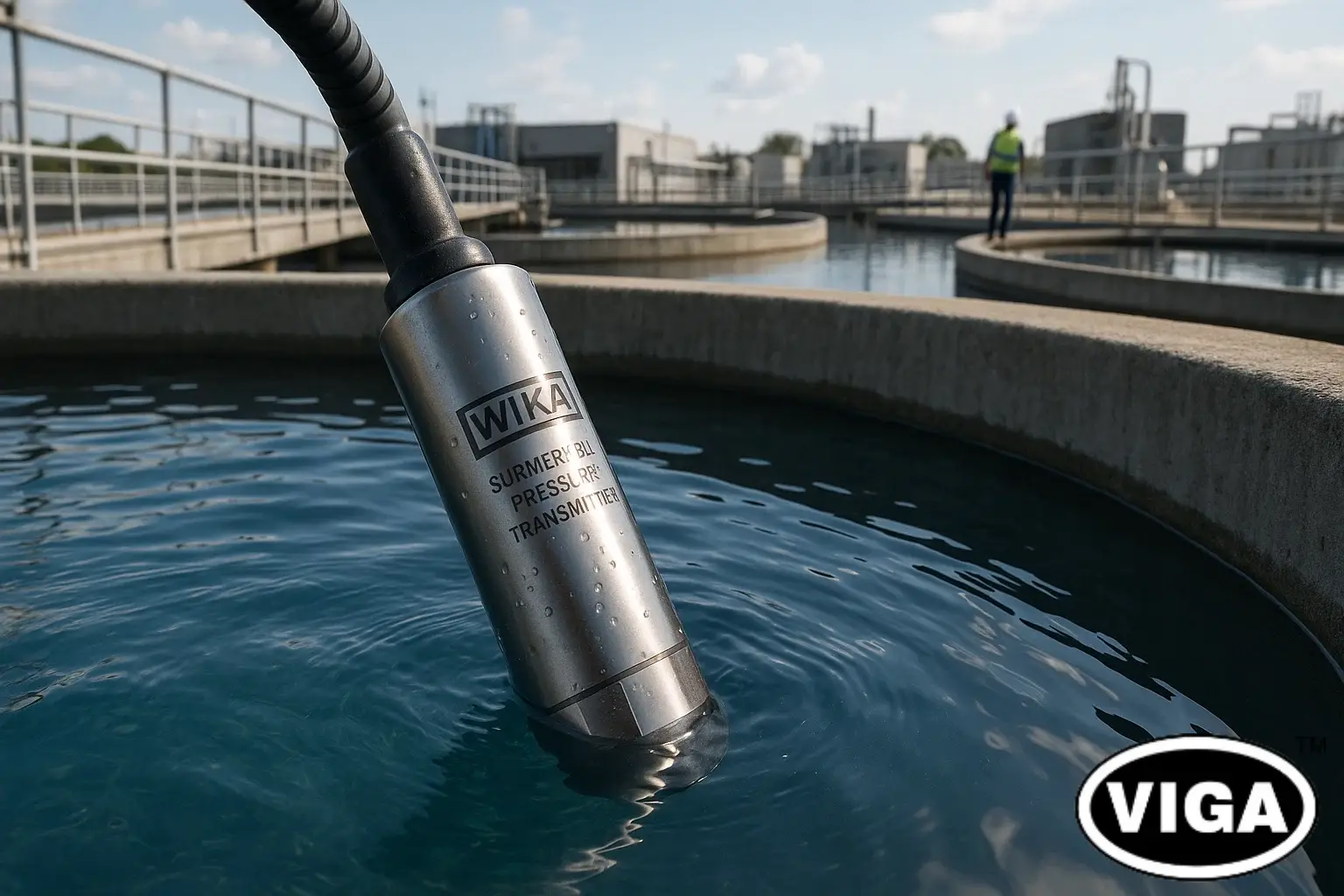
Level Measurement: The WIKA LH-20 submersible pressure transmitter thrives inside wells, reservoirs, lift stations and clarification basins, measuring liquid levels with the toughness needed to keep measuring for years without fuss.
Pressure Monitoring: Rugged pressure gauges and transmitters dot the piping of water networks, watching over pumping stations, spotting leaks, and delivering the right pressure to every tap and hydrant. On filter banks, they signal when the filter cake has grown heavy enough to need a blast of backwash.
Flow Measurement: Knowing how fast the water is moving—both clean and dirty—is how plants steer treatment processes, how municipalities calculate bills, and how regulators check for safety.
According to the EPA’s most recent Drinking Water Infrastructure Needs Survey, America’s water systems need $625 billion over the next 20 years. Matching this need with precise, dependable instruments is how we keep the wheels of water moving and the public safe.
HVAC & Refrigeration: Fine-Tuning Climate Control
The Heating, Ventilation, Air Conditioning, and Refrigeration market turns out millions of units every year. In this space, how reliable, affordable, and precise the equipment is can make the difference in how much energy is used and how comfortable a space feels. Whether it’s a massive chiller for a skyscraper or a small unit for a home, good measurement is the heart of good performance.
Main Uses:
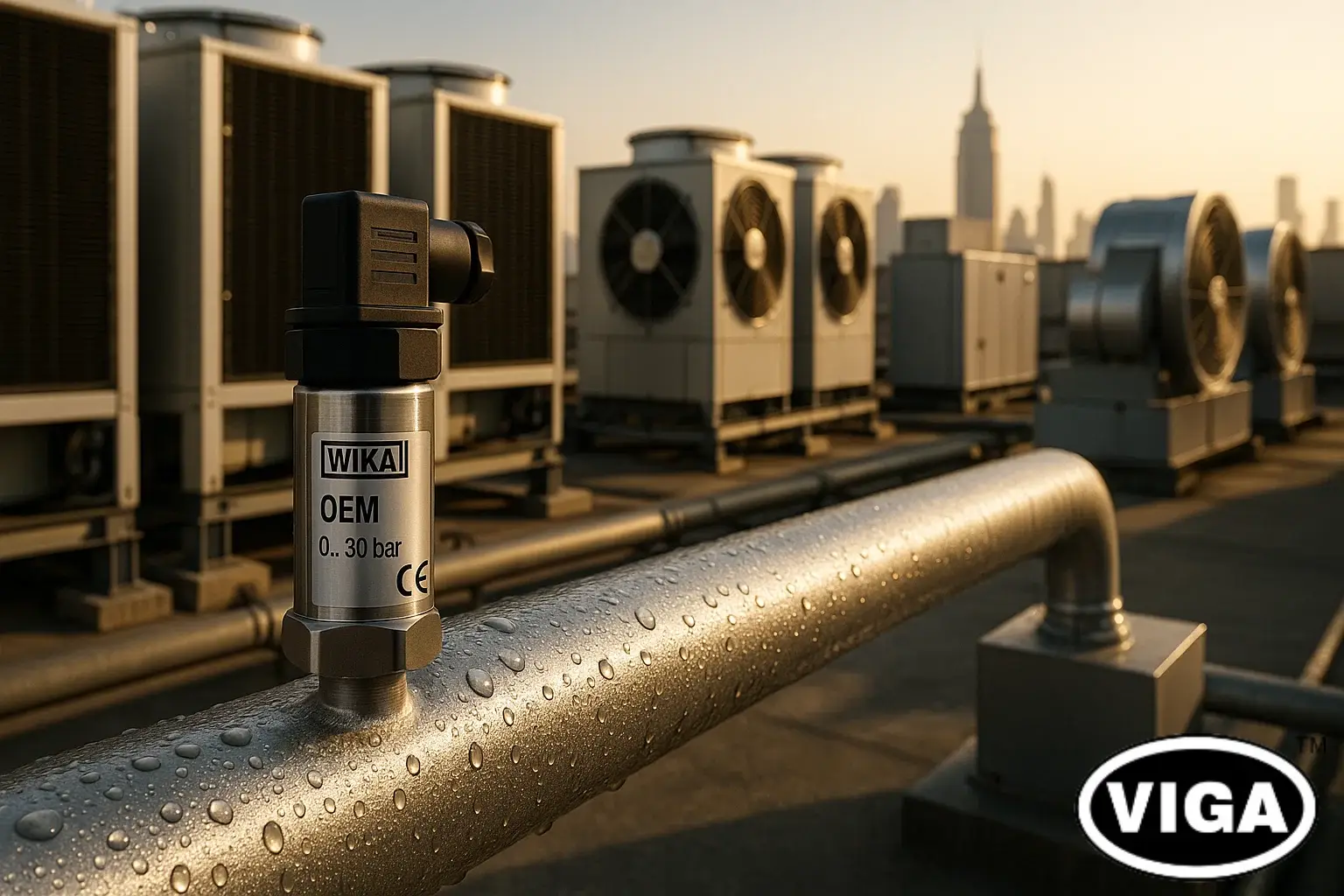
Refrigerant Circuit Tracking: WIKA builds millions of small OEM pressure sensors and gauges that get embedded in air conditioning and refrigeration loops. They are built to read suction and discharge pressures, which are key to keeping the system running efficiently and spotting any problems early.
Building Automation Systems (BAS): WIKA devices fit right into today’s BAS. Temperature sensors in the air ducts and chilled-water circuits, along with differential pressure sensors that watch filters and fans, feed the smart control system with the info it needs to make climate adjustments on the fly.
Energy Savings: With tighter energy codes like ASHRAE 90.1 now in place, keeping HVAC systems running precisely is a must. WIKA’s accurate, steady sensors help equipment run at its best, cutting down energy waste and lowering bills.
WIKA’s knack for producing top-quality, custom OEM sensors by the hundred thousand makes it a go-to partner for many global leaders in HVACR kit.
Summary and a Call for Precision
Whether they’re powering cities, keeping our cars moving, manufacturing critical medicines, or preserving our food, exact measurement is non-negotiable. WIKA instruments quietly support these vital industries, often hidden from view yet always essential. Our success doesn’t rest on any one gauge or sensor; it arises from our unwavering commitment to quality, our expert grasp of unique application hurdles, and a product lineup broad enough to cover almost every need. Engineers trust our technology because it delivers consistent, faultless performance in places where even a small error is intolerable.
Designing a new processing plant, tuning an existing system, or striving for absolute measurement dependability? The choice of instruments you make affects not just today’s readings, but every future outcome.
Are you ready to boost safety, efficiency, and reliability in your operations? Reach out to a WIKA expert now to explore your measurement challenges, and let us help you find the perfect solution for your application.

Frequently Asked Questions (FAQ)
Q 1. Why can WIKA instruments be safely used in hazardous areas?
A. WIKA builds instruments that meet strict certificates like ATEX, IECEx, and CSA for explosive zones. They do this by using designs that keep energy low, strong enclosures that don’t crack under pressure, and careful engineering so parts never create sparks. These features keep flammable gases, dust, and vapors from igniting in places like offshore platforms and chemical plants. Because of this focus on certified safety, companies in high-risk areas around the globe trust their instruments.
Q 2. How does WIKA keep its instruments accurate and reliable?
A. WIKA protects quality by following careful production steps and holding ISO 9001 certification. They also run accredited calibration labs (ISO/IEC 17025) that check instruments against both national and international standards. Before any instrument leaves the factory, it passes several quality checks, and customers can ask for detailed calibration reports that prove performance and traceability. This level of detail is vital for industries where every measurement must meet strict regulations.
Q 3. Can I get WIKA instruments tailored for my specific needs?
A. Definitely! Tailoring tools for special jobs is one of WIKA’s strongest points. Different industries often have special needs for things like connection types, construction materials, pressure limits, or electrical signals. WIKA’s engineering team works closely with customers to tweak existing devices or to create brand-new designs, like diaphragm seals made of rare metals or special sensor casings to fit right into OEM machines.
Q 4. What exactly is a diaphragm seal, and why is it so important?
A. A diaphragm seal is a safety gadget that keeps a pressure gauge safe from nasty, corrosive, thick, or super-hot stuff. Its bendable diaphragm holds the nasty stuff back and keeps it away from the internal fluid. When pressure pushes against the diaphragm, that force is passed on through the fill fluid to the gauge. This smart design guards the gauge, stops clogs in the process, and delivers steady, accurate readings even in the toughest factory conditions.