
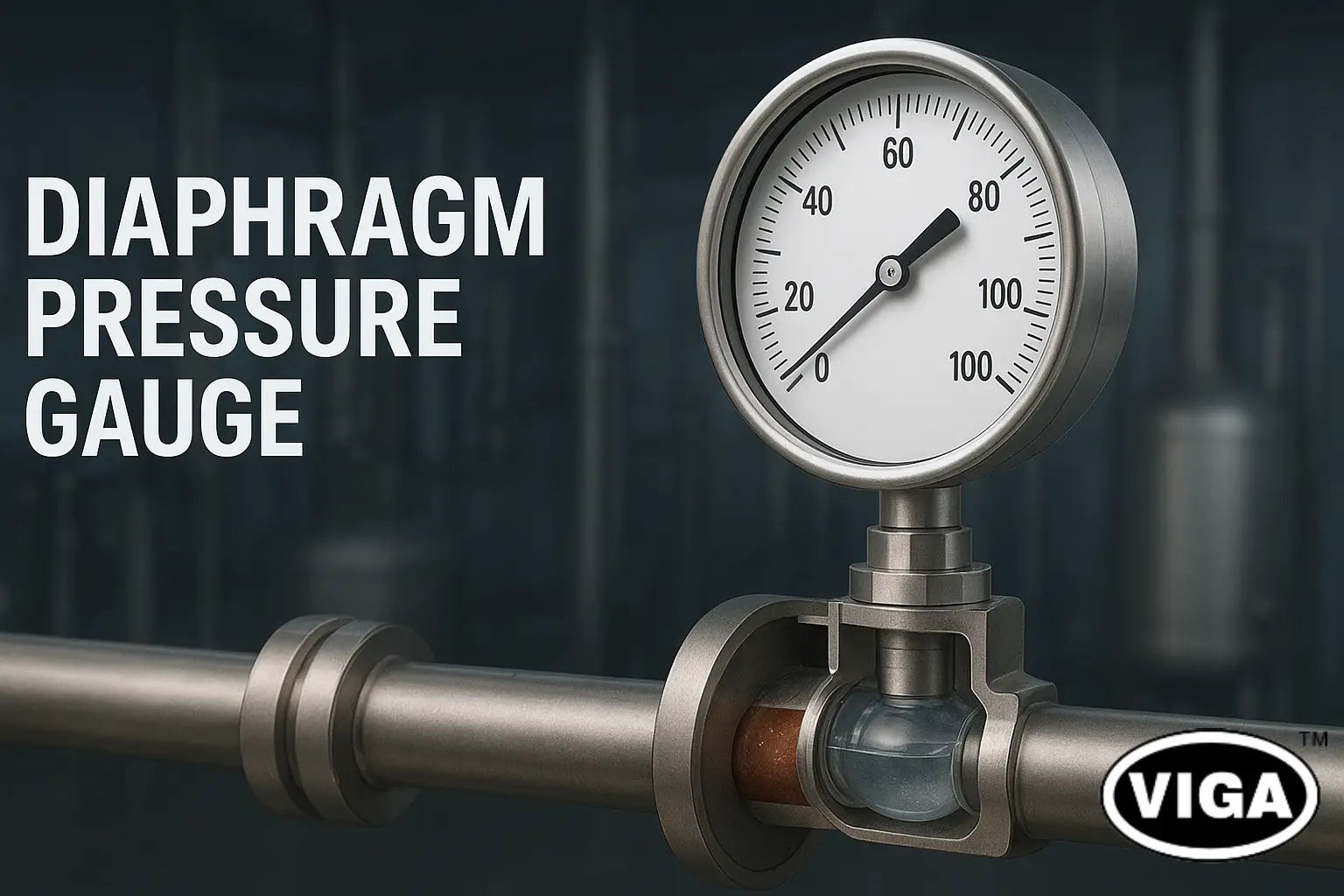
What Is a Diaphragm Pressure Gauge and Where Is It Used?
Understanding the Diaphragm Pressure Gauge: A Complete Industrial Guide
In industrial processing, precise pressure readings do more than keep production running smoothly—they protect people, ensure the right product quality, and extend the life of machinery. Regular Bourdon tube gauges handle many jobs, but they can struggle with tough liquids, hot gases, and corrosive chemistries. That’s when the diaphragm pressure gauge becomes a necessary tool.
This guide presents a clear overview of the diaphragm pressure gauge, sometimes called a diaphragm seal pressure gauge. We’ll break down how it works, why it outperforms standard gauges, where it’s used in every major industry, and what to look for when choosing one for your unique application.
What Is a Diaphragm Pressure Gauge?
A diaphragm pressure gauge measures pressure by using a flexible diaphragm to keep the sensitive parts of the device safe from the process fluid. In a standard gauge, the process fluid enters the instrument directly, putting it in contact with the sensing mechanism. In contrast, a diaphragm gauge positions the diaphragm as a protective wall, allowing the pressure to be felt without the fluid getting inside.
When the process fluid, gas, or slurry presses against the outer surface of the diaphragm, that little flexible membrane bends inward. This bend slides weightlessly through a sealed, incompressible fill fluid to the Bourdon tube gauge sitting a few inches away. The gauge senses the motion and the needle swings to show how hard the fluid is pushing.
That little barrier of fill fluid is the magic. It keeps acids, gunky slurries, and even sterile biological fluids safely on the diaphragm’s skin, so the delicate gauge mechanics can keep ticking without rust, blockage, or contamination.

Core Principle: How It Works
The diaphragm gauge works on the straightforward, clever rule discovered by Pascal: when you push on a fluid inside a sealed container, the same push travels through and touches every tiny corner without fading.
Here’s a step-by-step breakdown:
- Pressure Application: The fluid, whether it’s biting-acid or sticky-gravel slurry, nudges the outer face of the diaphragm seal.
- Diaphragm Deflection: Sorry membrane! The fluid’s push slams the diaphragm inward and the bending keeps on going a little more or a little less, depending on how much push the fluid is training on the diaphragm.
- Hydraulic Pressure Transfer: A carefully chosen fill fluid completely occupies the space behind the diaphragm and the connector to the pressure transmitter. When the diaphragm bends under pressure, it drives the fill fluid forward and sends pressure signals along the hydraulic line.
- Instrument Activation: That hydraulic pressure reaches the pressure measurement device—often a Bourdon tube type—and behaves as if the tubing had been pushed directly by the process itself.
- Pressure Indication: A trace pointer sweeps the scale face, clearly showing the process pressure in the readable units of the calibration.
The whole design—diaphragm, fill fluid, and pressure-sensing relay—is completely sealed against atmosphere, producing a fortified and leak-tight system.
Key Components Explained
Recognizing the individual components of a diaphragm pressure gauge system reveals why it performs reliably and why it is critical.
The Diaphragm: Acting as the mechanism’s core, this flexible, disk-like, wavy barrier is made of durable metals or synthetic materials. The chosen composition is both supple enough to bend and strong enough to resist the process fluid. For aggressive corrosives, the diaphragm may be formed from 316L stainless steel, Hastelloy C276, Monel, or tantalum, providing the safety and long life demanded by the service.
The Housing: Picture a sturdy outer shell that guards the fragile measuring element inside. This shell, usually called the seal body, holds the flexible membrane steady while forming a tight link to the piping carrying the process fluid. The part that truly interacts with the fluid is the bottom half of the seal, dubbed the wetted section, which must be crafted from a metal, plastic, or ceramic that remains strong against whatever it faces.
System Fill Fluid: Imagine a thick, clear liquid that conducts pressure the way a metal rod conducts sound. This liquid fills the space inside the housing, pushing the diaphragm outward to match the pressure of the process. Picking the right liquid is a delicate task. Options include the sweet, sticky consistency of glycerin, a slippery silicone oil, or a specialty Halocarbon safe for food. Each one performs well within a particular range of temperatures and cleanliness rules.
The Pressure Instrument: This is the front face everyone sees—a round dial, a glowing digital readout, or sometimes a sharp little switch. The heart of the operation is usually a Bourdon tube that bends with the pressure, though more modern versions might send electronic signals back to a control room.

The Clear Benefits of Diaphragm Seal Systems
Choosing a diaphragm seal is not a matter of preference; it is a choice to defeat the weaknesses of metal-only gauges. The pressure sensor industry is now a multi-billion-dollar sector, growing fast because every factory, refinery, and food plant needs measurements that stay accurate in extremes. The diaphragm seal, with its simple design and robust isolation, is the method that the market trusts again and again.
Here’s what these tools can do for you:
Protection from Corrosive and Aggressive Media: They resist harmful chemicals. Ordinary brass or stainless Bourdon tubes quickly corrode in acids or caustic liquids. A diaphragm made from high-grade alloys like Hastelloy or Tantalum stays intact where standard materials would fail.
Prevention of Clogging and Blockages: They stop clogs before they start. Thick liquids, slurries, or sludged solids that would block a tiny gauge orifice slide freely over the broad, unobstructed surface of the diaphragm. That’s why they’re vital in waste treatment, pulp mills, and other places where slurries are normal.
Maintaining Purity and Sanitation: They keep everything hygienic. In pharma, biotech, and food and beverage production, keeping the process pure is a rule you can’t bend. A diaphragm seal gauge fitted with sanitary clamps—often a smooth Tri-Clamp—eliminates corners and gaps where bacteria can hide and makes cleaning with chemicals (CIP) or steam (SIP) quick and easy.
Isolation from Extreme Process Temperatures: They protect the instrument from heat and cold. Media can come in much hotter or much colder than what a standard gauge can handle. A diaphragm seal separates the sensing part from the process, and by adding cooling elements or capillary tubes, you can safeguard the gauge from harmful temperatures.
Dampening System Pulsation and Vibration: When fast changes in pressure or rough vibrations hit a gauge, the pointer can jump around and the inside gears can be damaged. By filling the gauge case with liquid and using a diaphragm seal, the measurement becomes smoother and easier to read.

Common Applications Across Industries
The diaphragm pressure gauge fits so well in so many fields that it has become a reliable friend for engineers facing tricky process problems.
Chemical and Petrochemical Processing
You will most often find diaphragm gauges in the chemical industry. Many steps here deal with strong, corrosive liquids such as sulfuric acid or chlorine.
For example, inside a chemical reactor, a gauge with a Tantalum diaphragm measures the pressure of a hot acid mix. Tantalum does not rust in strong acid, and the seal keeps the gauge cool, so everything keeps running safely and steadily.
Pharmaceutical and Food & Beverage
Now the worry is not rust but keeping everything clean. A single speck of dirt or bacteria can ruin a batch. For this reason, diaphragm seal systems that meet 3-A sanitary standards or FDA rules are the normal choice.
Dairy Processing Plant
In a dairy plant, a Tri-Clamp diaphragm seal gauge keeps tabs on the homogenization line. Made from polished 316L stainless steel, its smooth surface and food-safe fill fluid—usually FDA-grade glycerin—ensure that no dairy product sneaks past and that it survives the aggressive cleaning cycles the industry demands.
Water and Wastewater
In a wastewater plant, the incoming flow is thick with sludge, grit, and suspended junk that a standard gauge would choke on faster than a minute. Down on the sewage sludge line, a flanged diaphragm gauge with a huge seal surface measures the pumping pressure. The diaphragm’s generous area keeps the sensing chamber clear, it keeps the readout steady and it guards the pump from damage and the plant from avoidable shutdowns.
Pulp and Paper Mill
The pulp and paper mill faces a similar enemy: companies the size of a fist tried it, and their names are no longer on the invoices. The stock line, constantly moving a thick, fibrous slurry, demands accurate pressure monitoring to keep the flow right. The mill drops a flanged diaphragm gauge, sometimes called a pancake gauge, right into the line. The shallow profile means the slurry can’t pile up on sensing parts and turn into a hockey puck of doom, and the mill’s pump and power bill thank it for that.
Oil and Gas Exploration
In upstream oil and gas work, somehow you’ve always got sour gas (H2S) and heavy, gritty drilling mud trying to ruin your gear. That’s why every sensor you send to those windy, remote spots needs to be bulletproof and dependable.
Take, for example, an offshore platform. Engineers there bolt diaphragm seals in Monel or Inconel onto the wellheads. Why? Because those alloys shrug off sulfide stress cracking—so your pressure transmitters and dials sit safe from corrosion and keep spitting out the right numbers to land safe well control and emergency shutdowns.

Picking the Right Diaphragm Pressure Gauge: What Really Matters
Grab the wrong diaphragm gauge system, and you’ve got trouble long before pay-out. Fleek answers only come from a deeper dive into the details. Here’s what to chew on:
-
Compatibility of materials
This is the elephant in the room. The parts that dive into the media—the lower housing and diaphragm itself—gotta mesh chemically or you’ll end up with pits, leaks, and R.I.P. sensors.
Top contenders:
316L Stainless Steel: Solid for simple, mildly nasty fluids and food-safe stuff.
Hastelloy C-276: Laughs in the face of acids, salts, and whatever else you drop on it.
Monel 400: The go-to for fluorine, hydrofluoric acid, and anything salty the ocean can throw.
Tantalum: Flat-out undefeated against the steaming, concentrated acids. It’s thick-skinned but you pay for every gram.
-
How the Gauge Fits Your Pipes
First, think about how the gauge will actually connect to your piping. The type of link you choose has to stop leaks and fit the job at hand.
Threads (NPT): These are the go-to for all kinds of industrial work.
Flanges (ANSI, DIN): Use these for big pipes, high-pressure runs, or slurries, since they give you more surface area to seal.
Sanitary (Tri-Clamp): The only choice for food, pharma, and any place that needs clean surfaces.
-
Pressure Range and How Precise It Is
When you pick a gauge, make sure the normal pressure sits in the sweet spot—between 25% and 75% of the dial. The engineering folks at ASME B40.100 say this makes the readings most accurate and the gauge last the longest. If there’s a diaphragm seal involved, it will change the big-picture accuracy a little, but a good supplier will already factor that in.
-
Temperature Limitations
Pay attention to the process heat and the surroundings where you’re mounting the gauge.
Process Temperature: If it’s too high for the gauge or the fill liquid, you’ll need a capillary line or a heat exchanger to shield the instrument.
Surrounding Heat: If the outside air gets too hot or too cold, it will change how much the fill liquid expands or contracts. This “temperature error” can mess with your readings, but a good manufacturer can correct for it.
-
Filling the Gauge Fluid
Choose the fill fluid by considering the expected temperature, pressure, and type of process.
Glycerin: Best for normal temperatures and typical industrial cases.
Silicone Oil: Works well in both highs and lows for tougher thermal ranges.
Halocarbon or Krytox®: Go here when working with tough stuff like chlorine or other strong oxidants.
Food-Grade Glycein or Oil: Always the choice when cleanliness for human consumption is a must.
Wrap-Up and Key Takeaways
The diaphragm pressure gauge is more than just a gauge with a guard. It is a complete assistance that accurately reads pressure when normal instruments would fail. It keeps the sensing element safe from sticky, corrosive, or sanitary fluids, so it boosts safety, blocks contamination, and cuts downtime.
From the explosive floors of chemical plants to the spotless floors of labs, the diaphragm seal is an everyday helper of process control. Matching it to the process fluid, its temperature range, pressure rating, and the correct flange is the only way to tap its full value.
If yours keeps burning out from jamming or corrosion, putting money into the correct diaphragm gauge is not more cost: it is a confirmable investment in steadiness and trust over the long haul.
Ready to tackle that tricky pressure measurement task? Reach out to our instrumentation pros anytime to talk about what you need, or flip through our full line of diaphragm pressure gauges waiting to be explored.
Frequently Asked Questions (FAQ)
Q 1. What’s the process for calibrating a diaphragm pressure gauge?
A. We calibrate the whole sealed system instead of just the gauge. First, we hook the diaphragm seal to a pressure calibrator—most often a deadweight tester. Once the pressure is applied, we watch the gauge’s dial and compare the reading to the pressure we already know from the calibrator. If there’s a difference, we adjust the gauge’s pointer by using an adjustable pointer or a calibration screw that’s part of the dial mechanism. This whole setup calls for some special gear to get it done right.
Q 2. What’s the difference between a “diaphragm seal” and a “diaphragm gauge”?
A. A diaphragm seal is the slim part with a bendy metal membrane that sits directly on the pipe and keeps harsh stuff from touching the gauge inside. A diaphragm gauge, on the other hand, is the entire unit you’d hang on the wall, which includes that seal, a colored liquid inside the chamber, and the dial that tells you the pressure. Some of us call the whole thing a diaphragm seal just for short, but that can confuse the next person who buys a spare part. Remember, you can screw that little seal onto a gauge, a readout box, or a switch, and it’ll protect them all the same way.
Q 3. What happens if the diaphragm on the gauge ruptures or fails?
A. If a diaphragm ruptures, the protective barrier is lost. The system fill fluid and the process media may mix, and the process media can enter the pressure instrument, likely causing it to fail. For highly hazardous or high-pressure applications, redundant systems or diaphragm rupture monitoring systems are sometimes used. A double diaphragm with a pressure switch in between, for instance, can alert operators to a primary diaphragm breach before the process media escapes.
Q 4. Can a diaphragm pressure gauge be used to measure a vacuum?
A. Yes, diaphragm gauges are very effective for measuring vacuum or compound (pressure and vacuum) ranges. The operating principle is the same but in reverse: negative pressure pulls the diaphragm outward, which creates suction on the fill fluid and moves the instrument pointer accordingly. It’s important to select a gauge and a seal system specifically designed and constructed to handle vacuum service to prevent damage to the diaphragm or inaccuracies from fill fluid vaporization under vacuum.
Q 5. How does a capillary line work with a diaphragm seal?
A capillary line is a length of flexible armored tubing used to remotely connect the diaphragm seal to the pressure instrument. It is filled with the same system fluid and serves two main purposes. First, it isolates the instrument from high process temperatures, allowing the heat to dissipate along the tube’s length. Second, it allows the gauge to be mounted in a location away from excessive vibration or for easier viewing, improving both safety and readability.

