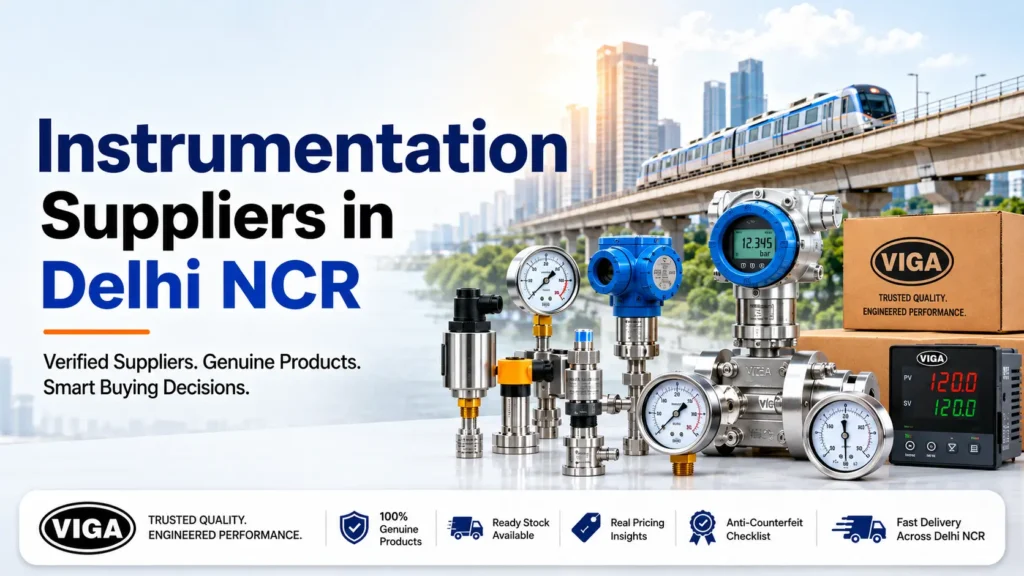
Instrumentation Suppliers in Delhi NCR
Table of Contents [-] Industrial Instrumentation Suppliers in Delhi NCR: Complete Buyer’s Guide Finding a genuine, reliable instrumentation supplier in Delhi isn’t just about price — it’s about having someone available when your plant goes down at 2 PM on a Friday. Every purchase manager in Delhi NCR has been in that situation at least once. A pressure transmitter on a critical loop gives out. The production line stops. The maintenance team is standing around. And the first three suppliers called either don’t have the item in stock, want three days for delivery, or are selling something that looks right but comes with no certificate and no guarantee of what’s actually inside it. That gap — between what Delhi NCR plants need from an instrumentation supplier and what most of the market actually delivers — is exactly what this guide is about. What to look for, which brands are genuinely available in this region, how to tell a real authorized dealer from one who just claims to be, and what pricing actually looks like for common instruments in 2026. Vinod Gautam Sales, known in the industry as VIGA, has been supplying instrumentation, automation products, and pneumatic solutions to plants across Delhi NCR for over 20 years. The observations in this guide come from that ground-level experience — working with purchase managers in Okhla, maintenance contractors in Wazirpur, project consultants setting up new facilities in Noida and Gurgaon, and plant engineers across every industrial pocket of this region. What to Look for in a Delhi NCR Instrumentation Supplier The market for industrial instruments in Delhi NCR is not small. There are dozens of dealers, distributors, and traders operating across the region. Some are excellent. Some are genuinely problematic. And from the outside — browsing a catalog or getting a quote over the phone — the difference is not always obvious. Here is what actually separates a supplier worth working with from one that creates problems. Genuine Products vs Grey Market Instruments This is the single most important factor, and it is the one most buyers do not investigate carefully enough until something goes wrong. Grey market instrumentation is everywhere in Delhi NCR. It comes in several forms. Sometimes it is straight counterfeits — instruments that carry a branded label, look physically similar to the genuine product, and come with documentation that has been fabricated. WIKA gauges are particularly commonly faked because the brand carries a significant premium. The fakes are convincing at a glance. The Bourdon tube wall thickness is inconsistent, the glycerin grade is poor, the movement is imprecise, and the certificate attached to the product is worthless — but none of this is visible until the gauge is in service and starts causing problems. A second form is parallel imports — genuine branded instruments sourced outside the authorized distributor channel, often from overseas markets, without Indian warranty coverage, without local technical support, and without the documentation that an authorized sale includes. These instruments may perform adequately, but when something goes wrong — a calibration query, a warranty claim, a request for additional certificates for a pharma audit — the supplier has no recourse. The third form is unbranded or house-labeled instruments from unverified manufacturers, sold alongside branded products in a way that creates confusion about what is actually being supplied. The protection against all of this is buying from suppliers who hold current authorized distributor status from the brands they sell. Not claimed status — documented, verifiable status with a current authorization letter from the brand’s India office. Any legitimate authorized distributor will show this documentation without hesitation. After-Sales Support and Technical Help An instrumentation supplier is not just a parts counter. For a purchase manager or plant engineer dealing with a real process problem, the ability to call a supplier and get a technically informed answer — not just a catalog reference — has real operational value. The difference shows up most clearly at the point of specification. A good supplier helps select the right instrument for the application: the correct accuracy class, the appropriate pressure range, the right process connection, the correct material for the media. Getting this wrong means buying an instrument that either fails prematurely or never quite does what the process needs it to do. Getting it right the first time saves the cost and the downtime of a second purchase. Calibration support is another dimension of after-sales service that Delhi NCR plants increasingly need. Pharmaceutical facilities, food processing units, and ISO-certified manufacturers all require calibration certificates for their process instruments. A supplier who can provide calibration certificates with their instruments — or coordinate calibration services — is worth significantly more to these plants than one who just delivers the product and moves on. Stock Availability and Delivery Time Same-day delivery is not a marketing slogan for Delhi NCR industrial buyers — it is a genuine operational requirement. When a gauge or transmitter on a running plant fails, the shutdown clock starts immediately. Every hour of downtime has a cost. A supplier with ready stock in Delhi, who can dispatch within hours of an order, is worth a premium over a supplier who needs to order from Mumbai or import from overseas. The practical question to ask any new supplier is: what do you actually hold in stock in Delhi right now? Fast-moving models — standard Bourdon tube gauges in common sizes and ranges, basic pressure switches, standard solenoid valves, FRL units — should be available for immediate dispatch. Slower-moving or specialty items can have lead times, but the core of any instrumentation catalog should be on the shelf. Major Instrumentation Brands Available in Delhi NCR Not all brands have the same availability in Delhi NCR, and not all dealers who claim to stock certain brands actually have meaningful inventory. Here is an honest picture of what is genuinely available and through what kind of channels. WIKA — Authorized Dealers in Delhi WIKA is the most specified premium instrumentation brand in Delhi NCR’s