Complete Guide to Triclover Gauges: Applications & Benefits
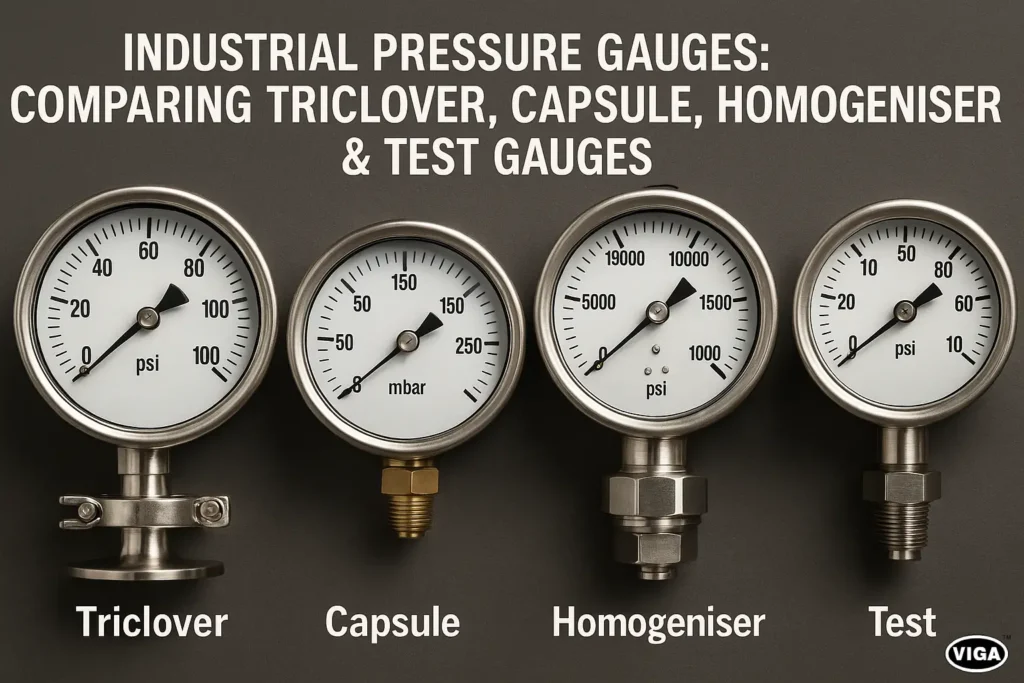
A Complete Guide to Triclover Gauges: Applications, Benefits & Industry Standards So you’re dealing with pressure gauges in your plant and someone mentioned Triclover gauges. Maybe you got written up by an inspector, or maybe you’re just tired of replacing gauges every few months because they keep getting gunked up during cleaning. Either way, you’re here because regular gauges aren’t cutting it anymore. Been there. Spent way too many years fighting with threaded gauges that looked like science experiments after a few cleaning cycles. The worst part? You never know if they’re reading correctly until something goes wrong. Real wrong. Here’s the thing about Triclover gauges – they’re not magic, but they solve problems that regular gauges can’t. If you work anywhere that has to stay clean (food, pharma, dairy, whatever), these might save your sanity. And probably some money too. What Are Triclover Gauges Anyway? Regular pressure gauges screw into your piping with threads. Works fine until you need to clean everything with hot chemicals. Those threads trap gunk, the internals get contaminated, and pretty soon you’re looking at a gauge that might be lying to you. Triclover gauges work different. Instead of threads, they use this clamp-on system. Three pieces – two pipe ends, a rubber gasket, and a metal clamp that squeezes everything together. No threads anywhere. The gauge sits flush against your pipe with smooth surfaces all around. The name comes from the three-part clamp system. Used to be a trademark thing, but now everyone calls them Triclover gauges even when they’re made by other companies. Like how people say “Kleenex” for tissues. Main thing is the design. Everything that touches your product is smooth stainless steel, polished up nice. Bacteria hate that. They need rough spots to grab onto, and these gauges don’t give them any. Why does this matter? Because contaminated gauges have shut down entire plants. Seen it happen. One bad gauge reading leads to bad product, which leads to recalls, which leads to very unhappy customers and regulators. Where You Actually Need These Things Pharmaceutical Plants Pharma is where this stuff gets really serious. One contaminated batch can literally kill people. No exaggeration. I know a guy who works at a facility that makes cancer drugs. They had a contamination event traced back to a pressure gauge that wasn’t getting clean during their wash cycles. Cost them three batches worth about $2 million, plus they had to shut down for a week while they figured out what happened. Their bioreactors need precise pressure control. Too much pressure kills the cells, too little stops the process. But they also have to sterilize everything with superheated steam between batches. Regular gauges either fail from the heat shock or create dead spaces where bugs can hide. After switching to Triclover gauges, their contamination rate dropped way down. Turns out those smooth surfaces really do make a difference when you’re trying to keep things sterile. Food and Beverage Operations Food processing has gotten pretty serious about contamination. Used to be “if it doesn’t smell bad, it’s probably fine.” Not anymore. Dairy plants are probably where these gauges make the most sense. Milk is basically bacteria food. Everything has to be spotless or you get nasty stuff growing everywhere. Their pasteurization lines need exact pressure and temperature control – too low and you don’t kill the bad stuff, too high and you ruin the taste. Worked with a dairy plant that was replacing regular gauges every six months because the cleaning chemicals were eating them up. Switched to Triclover gauges four years ago and they’re still using the same ones. Plant manager says it’s the best equipment decision they ever made. Breweries are getting into this too. Craft beer guys are obsessive about cleanliness because wild bacteria can ruin entire batches. One brewery owner told me he switched after losing three batches in a row to contamination. Said the Triclover gauges paid for themselves in the first month just from not losing product. Other Places Where Clean Matters Water treatment plants use these on their membrane filtration systems. Makes sense – you don’t want your monitoring equipment contaminating the water you’re trying to clean. Cosmetics companies too. Sounds less critical than pharma, but think about it – people put this stuff on their faces every day. Contaminated moisturizer can cause skin reactions in thousands of people. The lawsuits alone will kill you. Why These Gauges Actually Work Cleaning That Works Regular gauges are impossible to clean properly. All those internal threads and cavities never get completely clean no matter what you do. Even if you take them apart (which screws up the calibration), you still can’t get to everything. Triclover gauges solve this by eliminating the problem. The sensing part stays sealed while everything else can be cleaned in place. When you run cleaning chemicals through your lines, you’re cleaning the gauge connection at the same time. Had a facility do contamination testing after cleaning – swabbed both types of gauges after identical cleaning procedures. Traditional gauges still showed bacteria colonies. Triclover gauges came up clean every time. Maintenance That Doesn’t Suck Here’s what nobody tells you about gauge maintenance – it’s expensive. Not just parts, but labor time, production downtime, recalibration after every cleaning. Adds up fast. Triclover gauges disconnect in about 30 seconds. Pop the clamp, pull out the gauge, clean it, put it back. No tools needed except the clamp itself. No recalibration because you didn’t mess with the sensing mechanism. One pharmaceutical plant I know has been running the same Triclover gauges for eight years. Same accuracy, still look new. Try that with regular gauges in that environment. Staying Legal FDA inspectors know what they’re looking at. When they see Triclover gauges, they know you understand contamination control. When they see old-style threaded gauges, they start asking uncomfortable questions. The 3-A standards spell out exactly what sanitary equipment should look like. Smooth surfaces, no dead spaces, materials that can handle cleaning chemicals.